AI model photos for Etsy clothing
An Etsy clothing shop is usually one person who sews, sources or alters the pieces and then has to photograph them too. There is no model, often no second pair of hands, and a made-to-order piece may not exist until someone buys it. AI model photos give that person an on-model image from the flat lay they already shoot, on the same face every time.
Three photo problems, three fixes
You made the garment, so you are also the photographer, the stylist and the model. Most days that means a flat lay on the kitchen table, which shows the fabric honestly but tells a buyer nothing about how the piece falls on a shoulder.
The fix
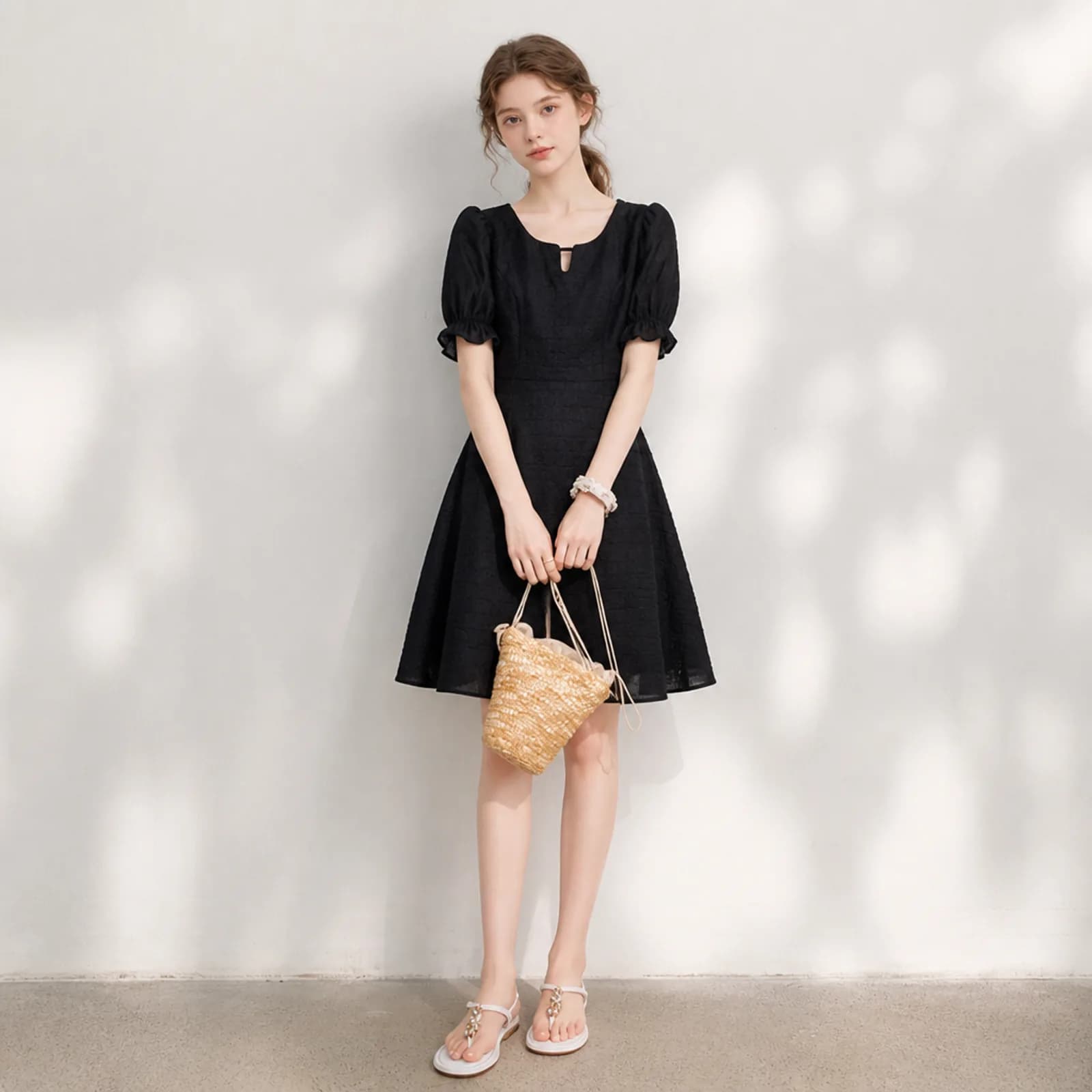
Generate the on-model version from that same flat lay. The cut, the print and the trim come out of your photo, so what you spent a week sewing is what appears on the model.
How it worksEtsy crops the thumbnail three ways, square, portrait and landscape, so anything busy at the edges of the frame gets sliced. A photo taken on a wooden table with the light from one window rarely survives all three crops.
The fix
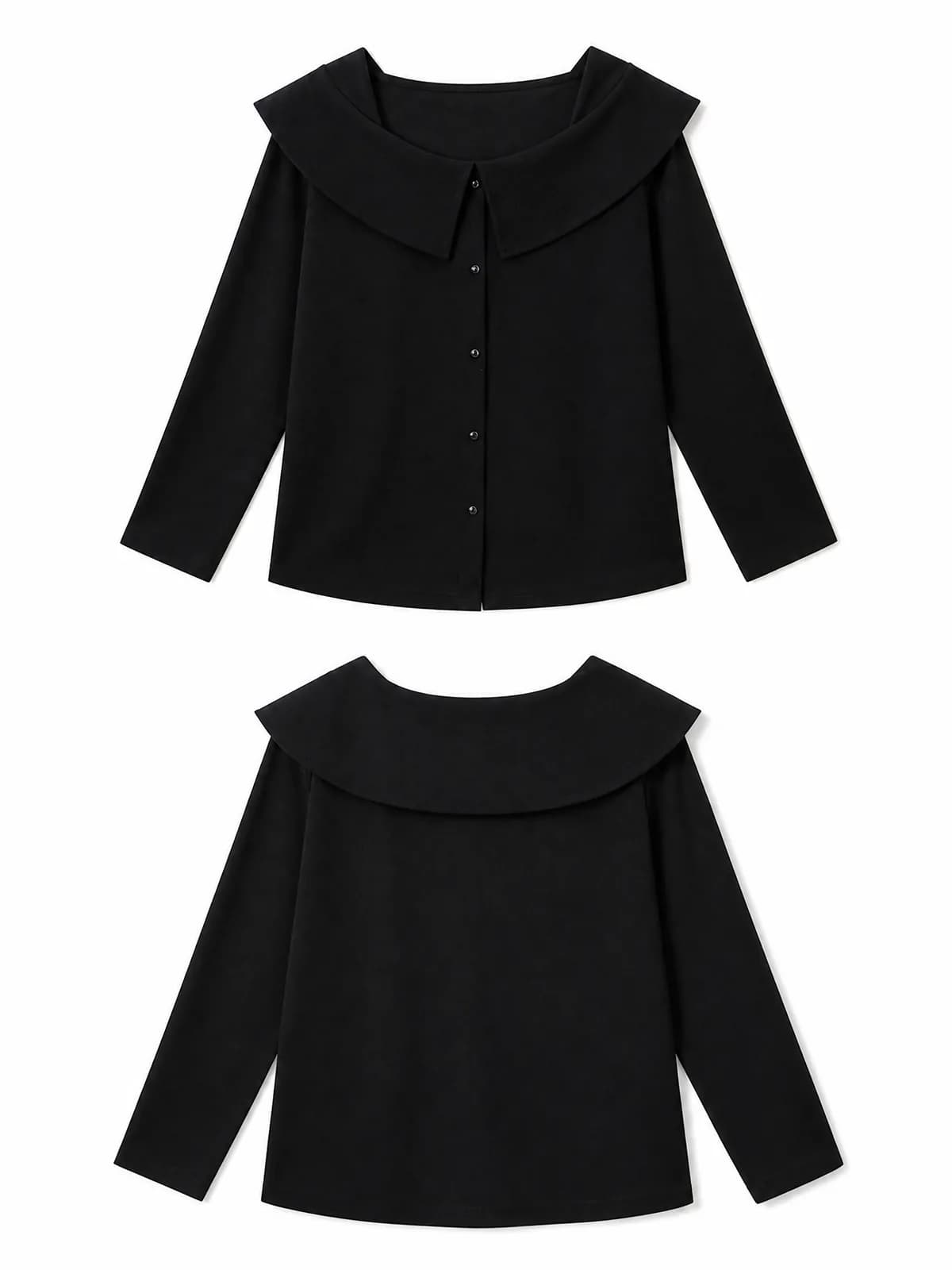
Produce a plain-background version of the same piece alongside the on-model shot, with margin around the garment, so every crop still lands on the product.
How it worksHandmade and small-batch pieces sell on atmosphere as much as on specification, but a styled shoot with a location and a model is exactly the budget a one-person shop does not have.
The fix
Put the piece in a setting instead of a studio and keep the garment unchanged, so a linen dress can read as a summer afternoon without anyone leaving the house.
How it works
Examples
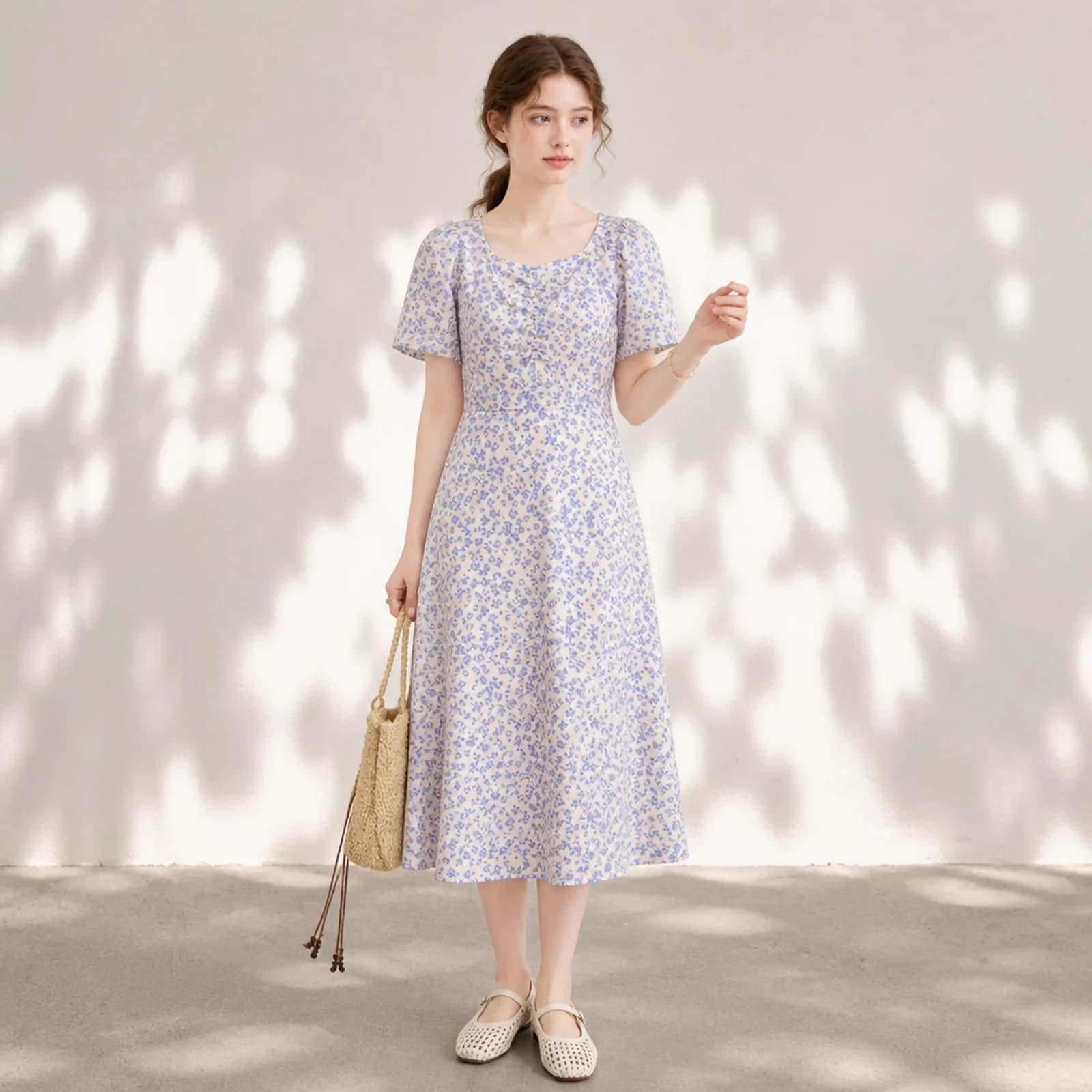
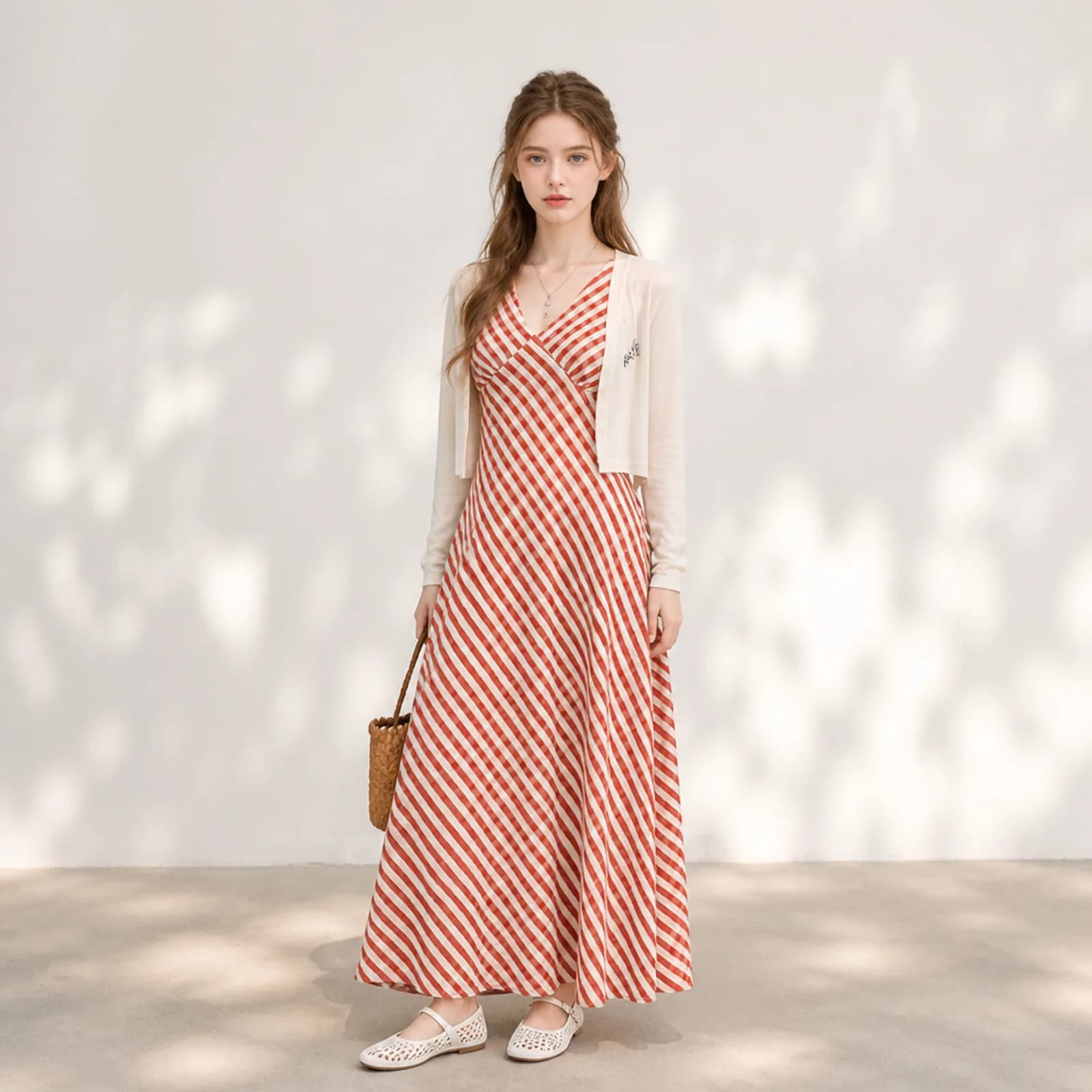
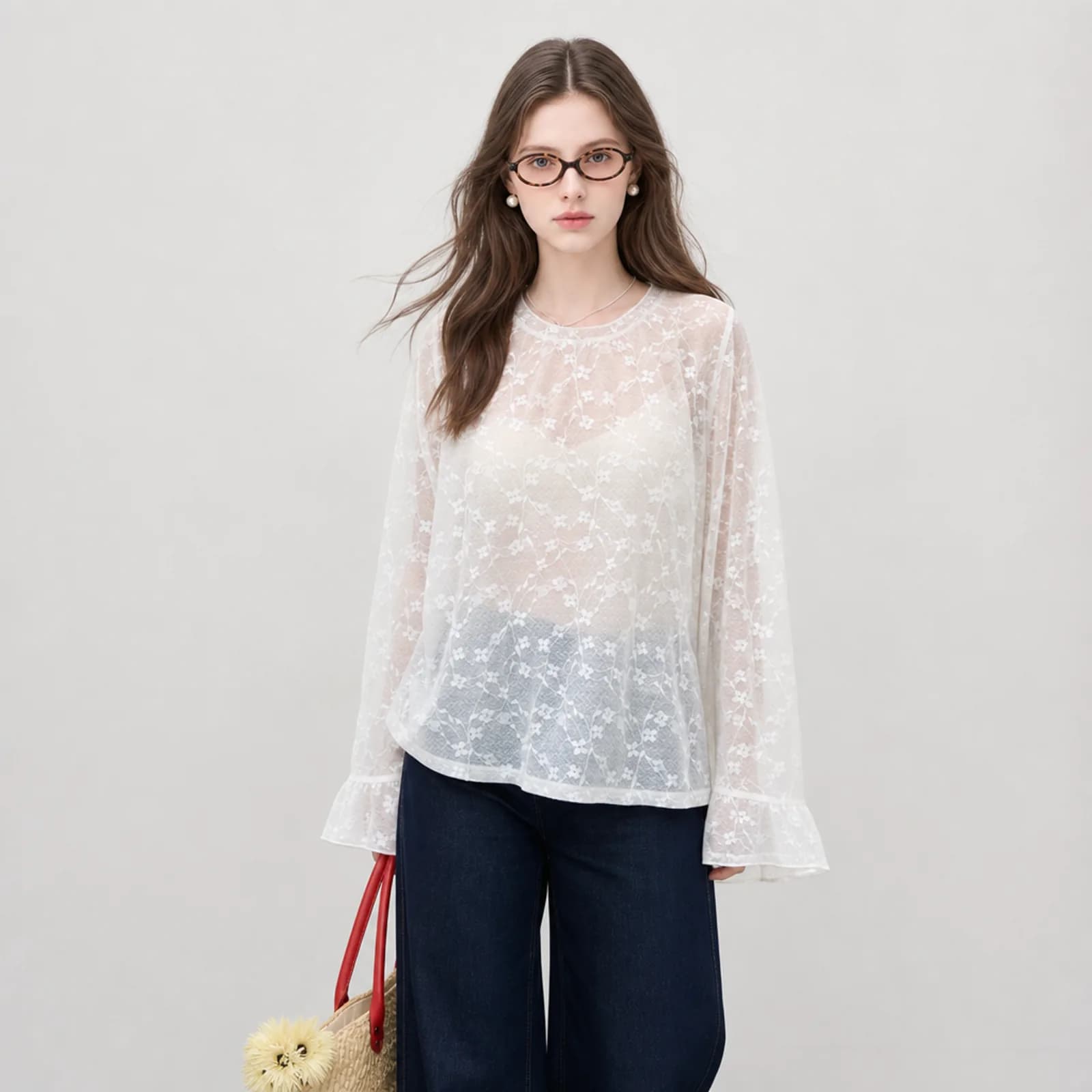
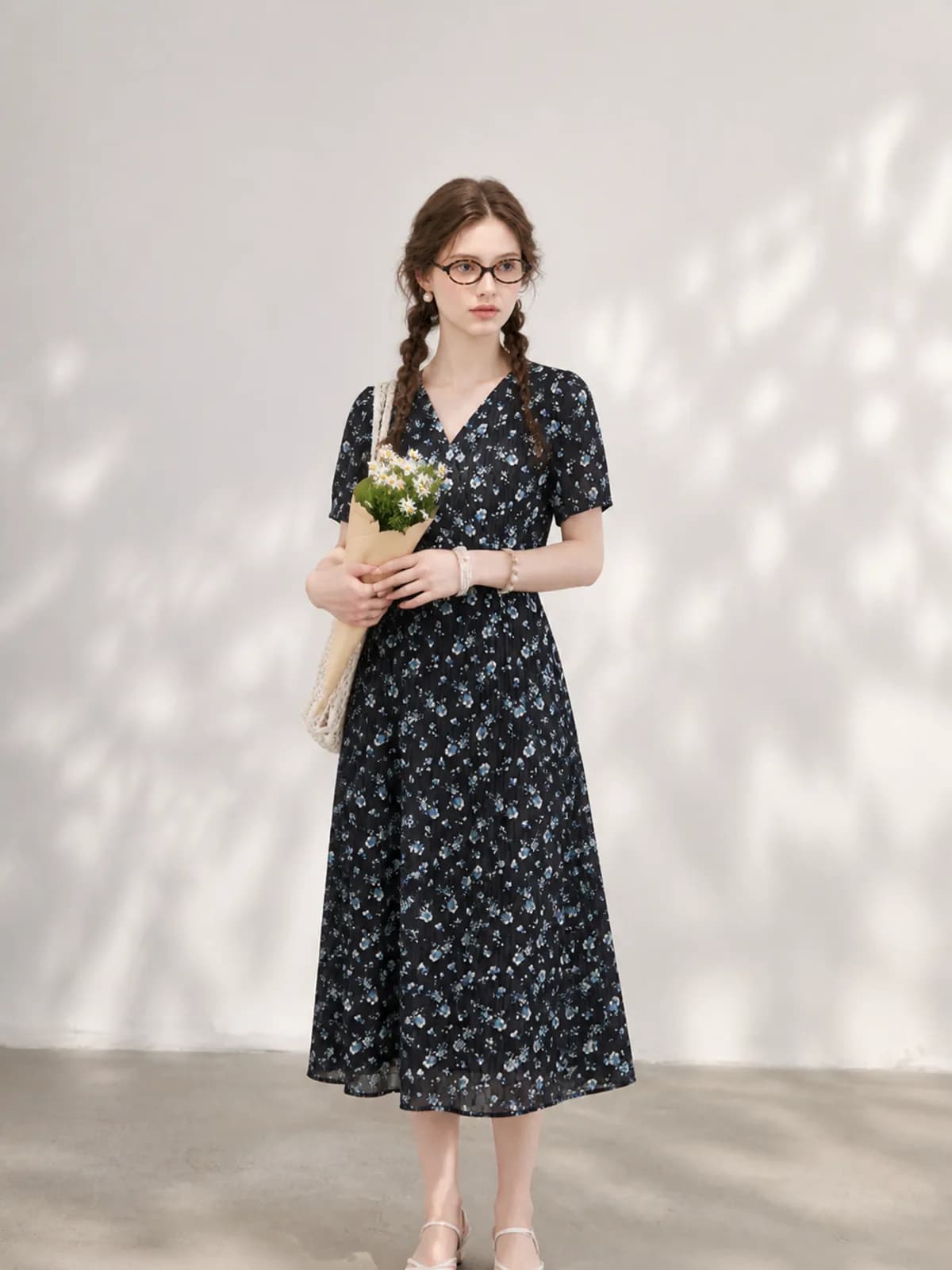
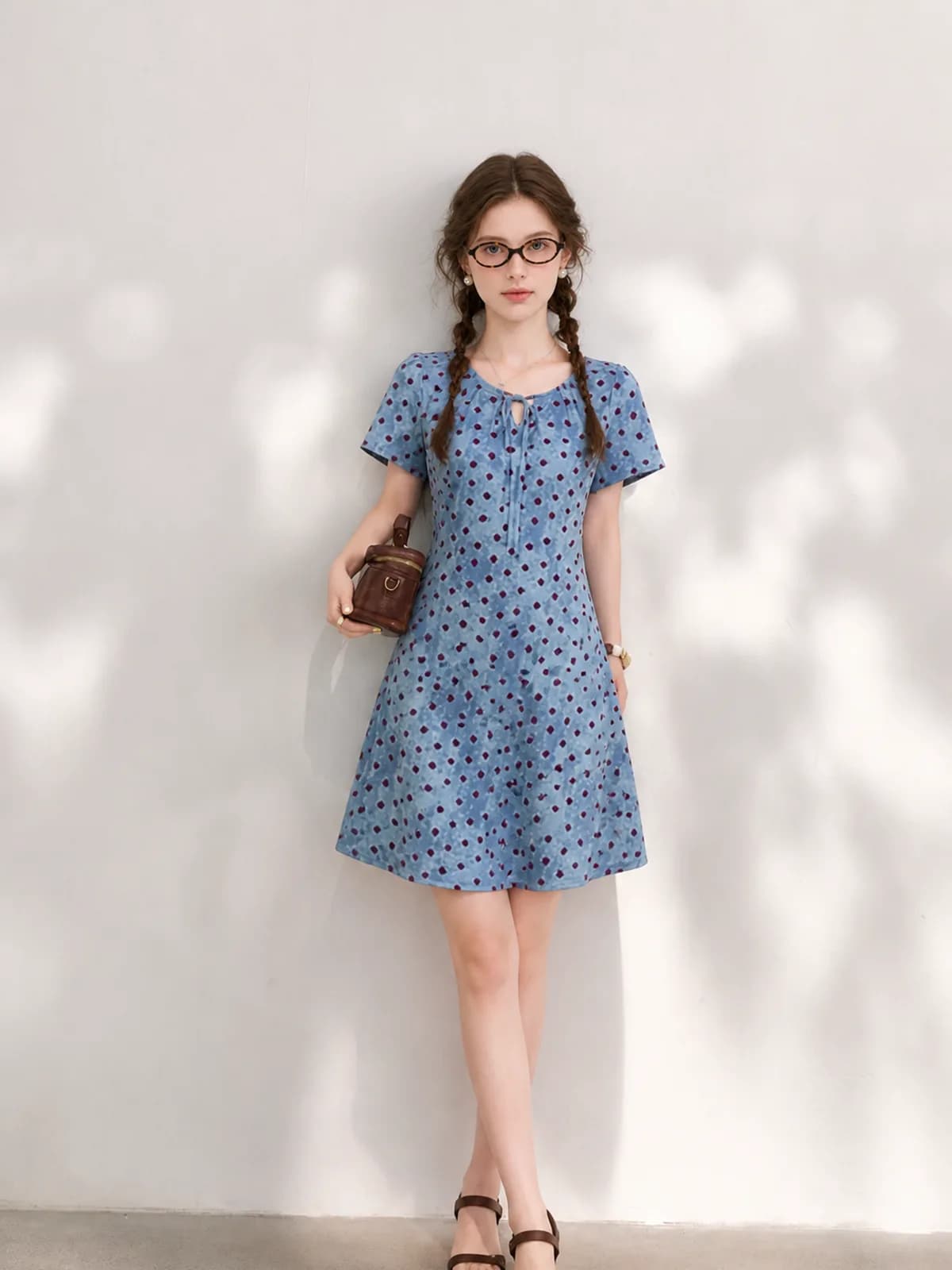
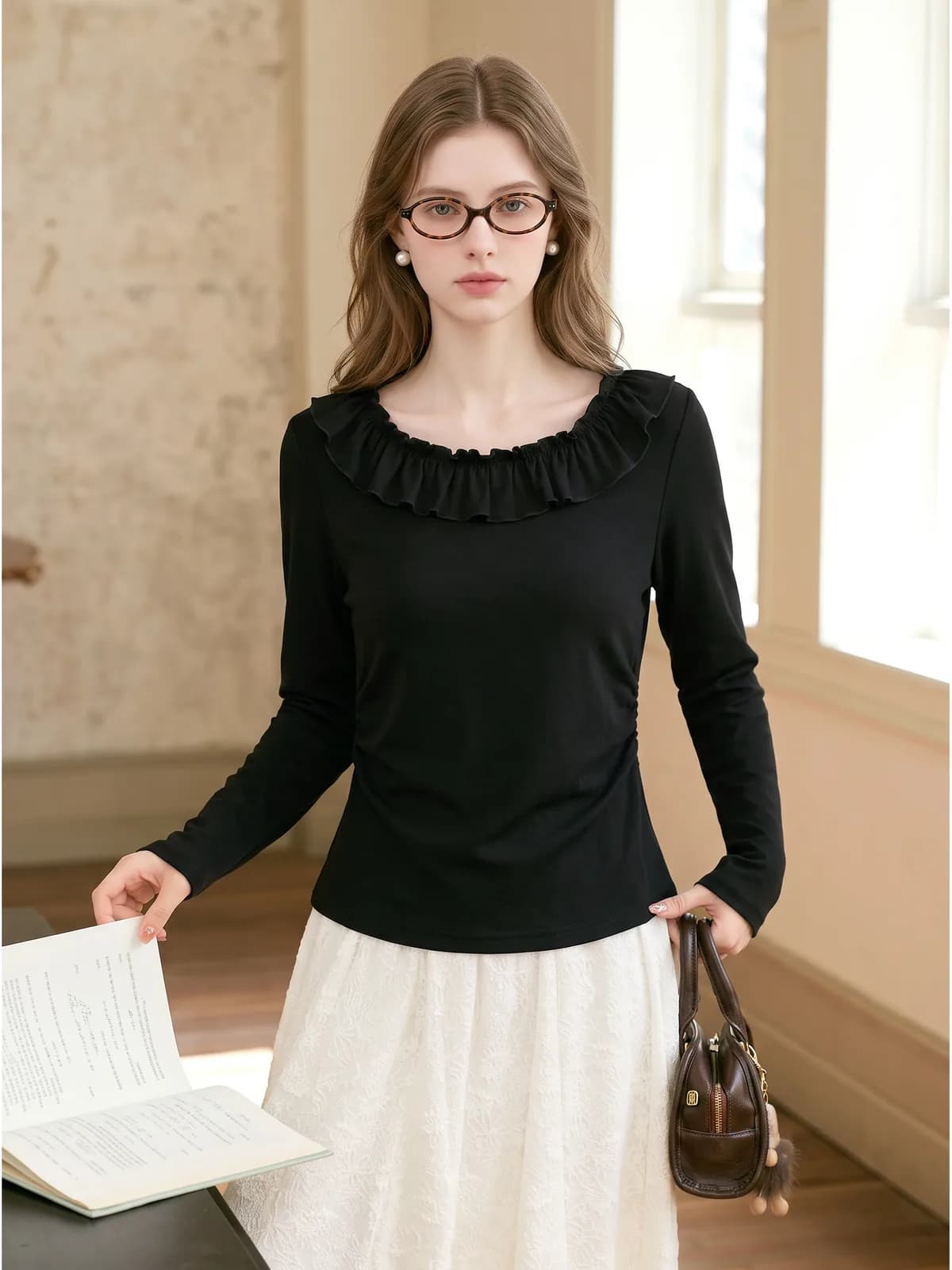
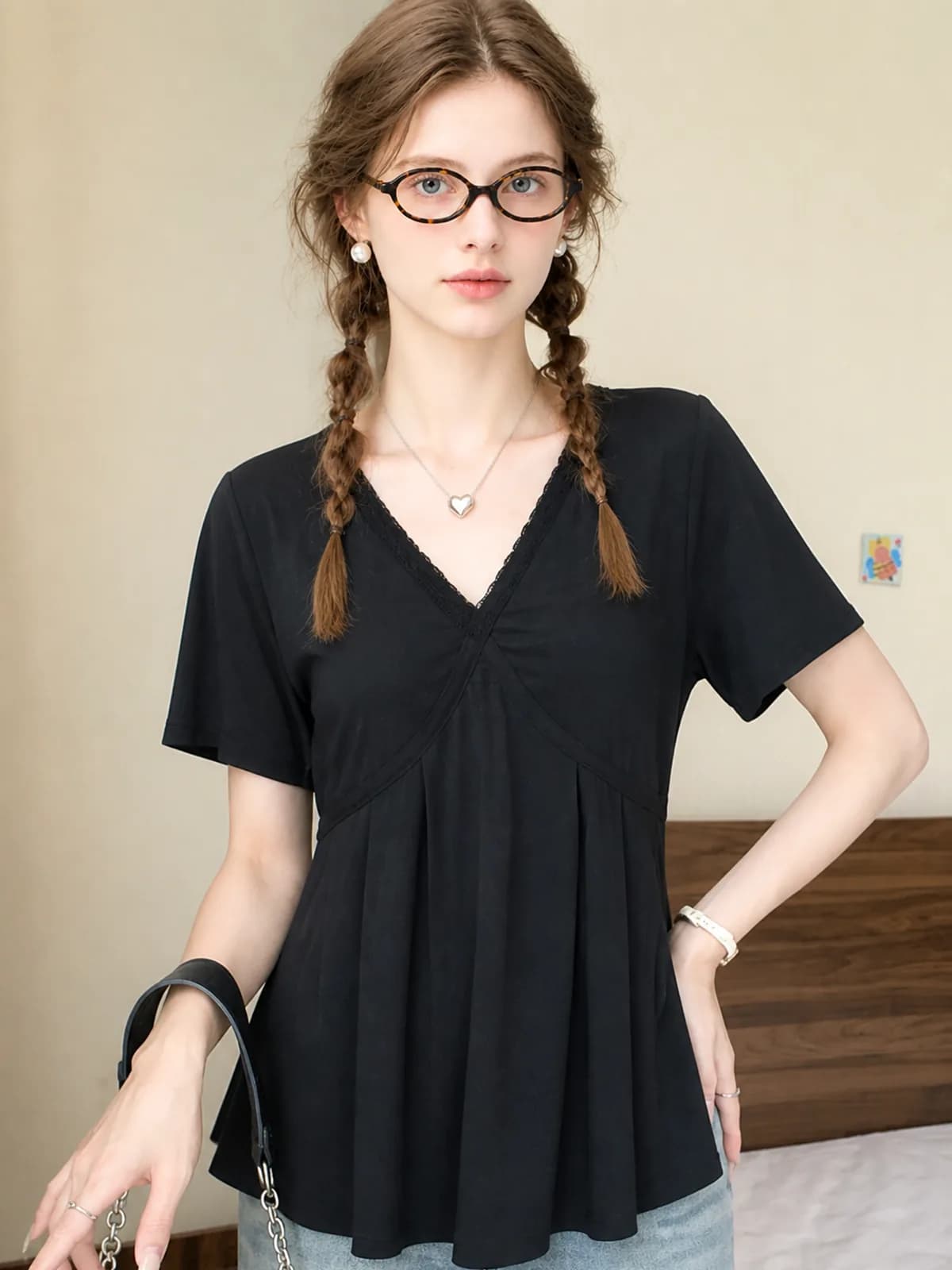
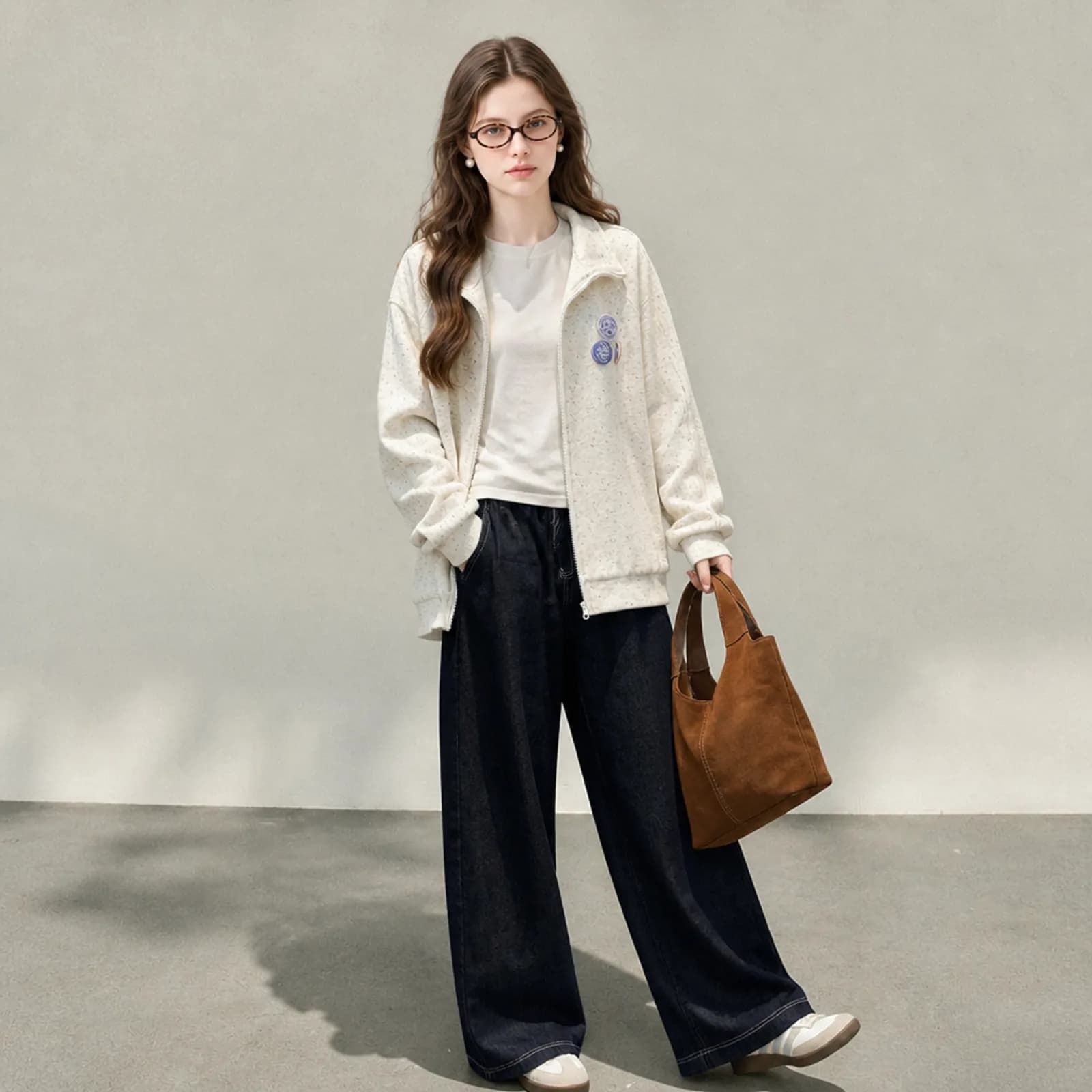
How it works
- 1Shoot the finished piece flat and evenly lit
Directly from above, on a plain surface, in daylight. Both sleeves open, hem straight, nothing folded under. This is the photo that carries the stitching and the trim, so sharpness matters more than resolution.
- 2Generate on your shop model
Save one model the first time and reuse it on everything. A shop where every listing shows the same face reads as a label rather than a series of unrelated experiments, which is what an Etsy front page is judged on.
- 3Upload with your own photos alongside
Put your real photo of the finished piece first, add the on-model image and the plain version behind it, and say in the description that the model image is AI-generated.
What this unlocks
- One face across the whole shop
- Made-to-order shops add listings slowly over years. Reusing the same saved model means a listing added this week sits beside one from last winter without the gallery looking like it was assembled by two different people.
- A new listing does not wait for a shoot
- Nothing is scheduled and nothing has a minimum, so a piece finished on Thursday night can be photographed flat, generated and listed before bed rather than waiting for a day with good light and a friend who is free.
- Variations without a shoot each
- A shop that offers the same dress in six fabrics normally photographs one and describes the rest. Each fabric can have its own on-model image instead, which is the difference between a buyer imagining a colourway and seeing it.
- Fewer messages about fit and length
- Handmade sizing rarely matches high-street sizing, so buyers ask. An on-model image next to your measurements answers most of it up front, and on a made-to-order listing that is the conversation that decides the order.
Where sellers use it
- Etsy listings
- Etsy asks for at least 2000 pixels on both sides and at least 635 pixels on the first image, warns that files over 1 MB may fail to upload, and renders transparent areas of a PNG as black. Make the first image landscape or square, and convert to sRGB before uploading.
- Etsy search and Etsy Ads
- The thumbnail is cropped three ways, so the garment needs margin around it and cannot rely on detail at the edges. A plain-background version of the same piece is the one that survives at thumbnail size in a crowded search result.
- Instagram and Pinterest
- Most Etsy traffic that is not Etsy search arrives from somewhere else. Instagram keeps the original resolution between 1.91:1 and 3:4 at up to 1080 pixels wide, so generate at the ratio you post in rather than cropping a square down afterwards.
- Your own shop and markets
- Sellers who also run a Shopify store or a stall need the same piece shown two ways: clean for the web listing, styled for the printed card or the sign. Both come from the one flat lay, which is the part that used to need two shoots.
Common pitfalls
- Making the AI image the first image
- Lead with your own photograph of the real piece and put the generated on-model image in the slots behind it. A buyer should never be surprised by what arrives, and the first photo is the one they hold you to. Etsy’s listing-image rules change, so read the current version in your seller account before you rearrange a whole shop.
- Not disclosing the AI in the description
- Say in the listing description which photos are AI-generated model images. Disclosure costs one line, and a buyer who reads it before ordering does not open a case after delivery.
- Letting the fabric lose its texture
- Handmade shops sell on texture: the weave of the linen, the ply of the yarn, the lace edge. Check the output against your flat lay at full size, and keep a macro shot of the fabric in the gallery whichever way the model image comes out.
- Shooting under a warm bulb
- Indoor bulbs push everything yellow, and colour is read out of your photo. For naturally dyed or undyed fabric, where the whole appeal is the exact shade, shoot in daylight and check the result against the cloth in your hand.
- Treating a mockup as the finished piece
- For personalised items Etsy requires the first image to show a finished, customised example rather than a blank product or placeholder text. A generated model image does not remove that requirement; it sits in the images after it.
What it costs
From $0.10 an image, from 6 credits depending on model and resolution, with the price shown before you confirm. No subscription, credits never expire, and verifying your email grants 50 free credits. See pricing
Go deeper
Related
AI product photos for resellers
AI product photos for resellers on Poshmark, Depop, Vinted and eBay: turn a hanger or flat-lay phone shot into an on-model image, one listing at a time.
AI clothing photos for Amazon sellers
AI clothing photos for Amazon listings: pure white images, on-model gallery shots and close-ups from one garment photo, plus what Amazon allows where.
How do I turn a flat lay into a model photo?
How to turn a flat lay into a model photo: what to photograph, which AI tool setting to use, and what to check before the image goes into a listing.
Questions
- Is AI model photography allowed on Etsy?
- Etsy does not publish one rule that approves or bans every AI model photo, and its policies change, so read the current wording linked at the bottom of this page. The cautious pattern is your own photo of the real item first, the generated model image behind it, ordinary product photos and measurements alongside, and a line in the description saying which images are AI-generated.
- What image sizes does Etsy want?
- At least 2000 pixels on both sides, with the first image at least 635 pixels and shot landscape or square. Files over 1 MB may fail to upload, transparent PNG areas render black, and you should convert to sRGB first.
- Does it work for made-to-order pieces that do not exist yet?
- Only if you have photographed the piece at least once. The garment in the output is read from your photo, so you need a finished sample, a previous order you photographed, or the fabric made up. There is nothing to generate from a description alone.
- Can I show the same dress in six different fabrics?
- Yes, if you have a flat lay of each fabric made up. Each one is generated separately on the same saved model, which keeps the comparison honest: the buyer sees six fabrics on one body rather than six photographs taken in six different rooms.
- Will handmade details like lace and hand-stitching survive?
- Fine detail is the hardest case for any tool of this kind, and it depends on how sharp and how close your input is. Check the output against your flat lay at full size, and keep a macro photo of the stitching or the lace edge in the listing whatever the result.
- Can I keep the same model across every listing?
- Yes, and on Etsy it matters more than almost anywhere else. Shoppers browse a shop page as a whole, so one saved model across every listing is what makes a slow-growing handmade shop look like a single coherent label rather than a stack of separate projects.
- What about vintage clothing sold on Etsy?
- Vintage pieces are handpicked rather than made, and buyers expect honest condition photos. Generate the on-model image so the cut is visible, then keep your own photographs of the label, the seams and any wear, because that is what a vintage buyer actually reads.
- How much does one listing cost to photograph this way?
- One on-model image plus one plain-background image is two generated images. Each is priced in credits and shown to you before you confirm, there is no subscription, and credits do not expire, which suits a shop that adds a few listings a month rather than hundreds.
- Can I use these images in Etsy Ads?
- Etsy Ads use your listing images, so whatever you upload is what runs. That is an argument for making the first image and the plain-background version as clean as possible, because an ad impression is decided at thumbnail size before anyone opens the listing.
Make one and see
Verify your email and 50 credits are yours. Failed runs are refunded automatically.
Make your first image free